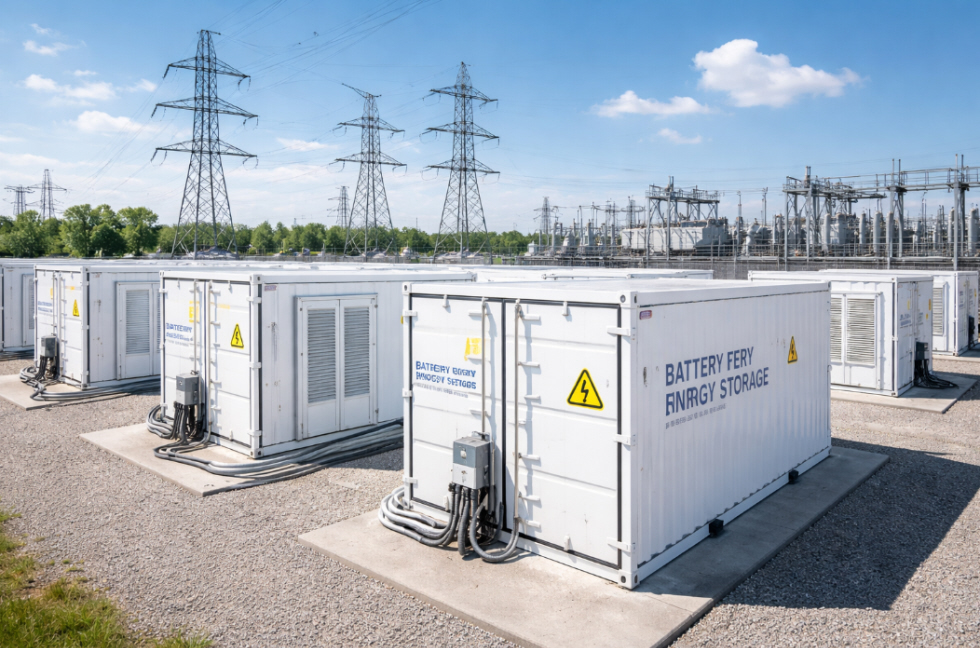
Grid-scale batteries are gaining momentum as power systems worldwide struggle to manage rising volatility driven by renewable energy expansion. As solar and wind generation continue to grow, their intermittent nature is placing increasing pressure on electrical grids that were originally designed around predictable, centralized power sources. Large-scale battery storage is now emerging as a critical solution, allowing excess renewable energy to be stored during periods of oversupply and released when production drops or demand spikes.
Energy operators and policymakers are increasingly viewing grid-scale batteries not as auxiliary infrastructure but as a core component of modern power systems. Advances in lithium-ion technology, combined with falling costs and improved energy density, have made large battery installations economically viable at scale. In parallel, alternative storage technologies such as sodium-ion and flow batteries are attracting attention as long-duration solutions capable of supporting grids over extended periods.
The shift toward large-scale storage also reflects a strategic reassessment of energy security. Batteries enhance grid resilience by providing rapid response capabilities during outages, stabilizing frequency fluctuations and reducing reliance on fossil-fuel-based peaker plants. In regions experiencing extreme weather events and growing electricity demand, storage systems are becoming essential tools for maintaining reliability while advancing decarbonization goals.
As renewable penetration deepens, grid-scale batteries are expected to play an increasingly central role in shaping energy markets, influencing pricing dynamics and infrastructure planning. What was once considered an experimental technology is now evolving into a foundational pillar of the global energy transition, redefining how electricity is generated, stored and delivered.