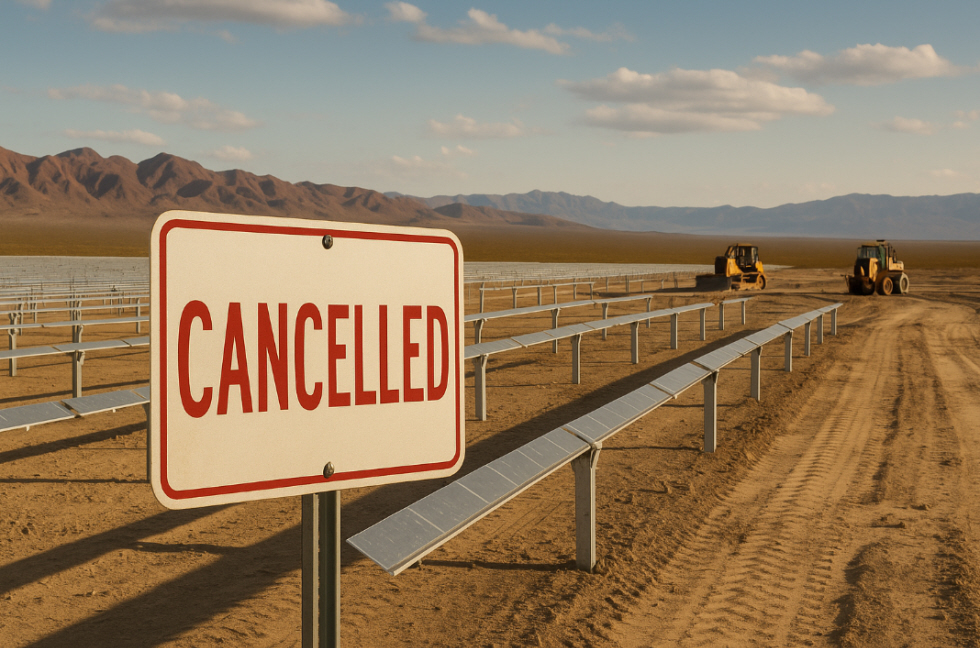
The United States government has decided to cancel one of the nation’s largest planned solar projects, known as Esmeralda 7, located in the state of Nevada. Originally designed to generate more than six gigawatts of clean energy, the project was expected to power millions of homes and accelerate the country’s path toward energy independence in the western region. However, the sudden suspension has raised concern among those who support the nation’s ecological transition.
According to preliminary reports, the cancellation reflects a shift in national energy priorities, aiming to balance the growth of renewable sources with the continued use of conventional production to ensure grid stability. Companies involved in the project warn that the decision could slow down the expansion of large-scale solar infrastructure and affect future investments in photovoltaic technology.
Despite this, several environmental organizations insist that the move will not stop the broader national momentum toward clean energy. States such as California, Arizona, and New Mexico continue to advance major solar and wind projects that together could offset the capacity lost in Nevada. Experts agree that the U.S. energy transition does not depend on a single initiative but on a consistent and diversified strategy that combines technological innovation, efficient energy storage, and active public participation.
Still, the Esmeralda 7 case highlights the persistent challenges in coordinating federal and local policies, managing environmental permits, and reconciling energy development with land conservation. In a global context of rising electricity demand, the country now faces the challenge of finding a sustainable balance between technological progress, environmental protection, and long-term energy security.