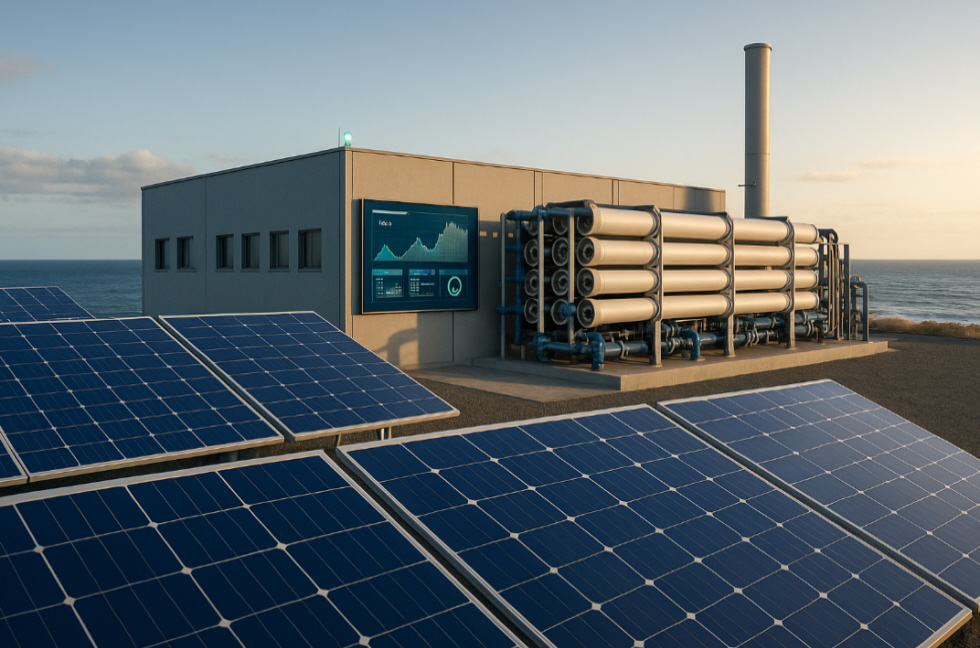
A new generation of desalination startups is harnessing artificial intelligence to revolutionize access to clean water in some of the world’s driest regions. As global temperatures rise and freshwater scarcity becomes one of humanity’s most pressing challenges, these companies are using advanced algorithms and data-driven systems to cut costs and reduce energy consumption in seawater desalination plants.
The result is a new wave of technological optimism — one that blends sustainability, efficiency, and innovation. Traditionally, desalination has been an energy-intensive and costly process, limiting its scalability in developing nations. However, emerging firms such as WaterAI, BlueDesalt, and HydroLoop Technologies are using AI-powered monitoring systems to optimize every stage of the desalination cycle.
Their platforms analyze real-time data on salinity, temperature, and pressure to adjust pump speeds and chemical dosing automatically, lowering operational costs by up to 30%. This integration of artificial intelligence not only reduces energy waste but also extends the lifespan of filtration membranes, one of the most expensive components in any desalination facility.
These startups are finding strong financial backing from both private investors and environmental funds seeking sustainable water solutions. In California, where prolonged droughts have severely affected agriculture, AI-driven desalination plants are now producing millions of gallons of potable water daily. In the Middle East, particularly in Saudi Arabia and the United Arab Emirates, similar systems are being scaled to support entire urban districts. Meanwhile, in southern Europe, regions like Spain and Greece are investing in AI-assisted desalination networks powered entirely by renewable energy.
“The fusion of AI and clean water technology represents one of the most promising frontiers of environmental innovation,” said Dr. Clara Hassan, a hydrology expert at the World Water Forum. “By combining machine learning with renewable energy sources, we are creating a sustainable loop that can serve both industrial and human needs efficiently.” In addition to reducing costs, AI is helping improve water quality and reduce environmental impact. Machine learning models can predict when filters need cleaning or replacement, preventing brine discharge from exceeding safe salinity levels in coastal ecosystems.
Some systems even use satellite data and predictive modeling to identify optimal intake locations, minimizing harm to marine life. These innovations are crucial for ensuring that desalination remains an environmentally responsible solution to global water scarcity. While progress is accelerating, challenges persist. Many regions still face barriers related to infrastructure costs, regulatory frameworks, and the carbon footprint associated with older desalination plants.
Nevertheless, the integration of AI and renewable power — particularly solar and wind — is steadily transforming the economics of the industry. By coupling clean energy with intelligent automation, water production is becoming not only sustainable but also scalable.
Experts predict that by 2035, AI-assisted desalination could account for more than 25 percent of all new freshwater sources globally, a dramatic increase from today’s 8 percent. The combination of technological innovation and climate necessity is driving one of the fastest-growing green industries in the world. What was once a last-resort solution is now becoming a cornerstone of environmental resilience, proving that smart technology can turn the tide in the global fight for clean water.