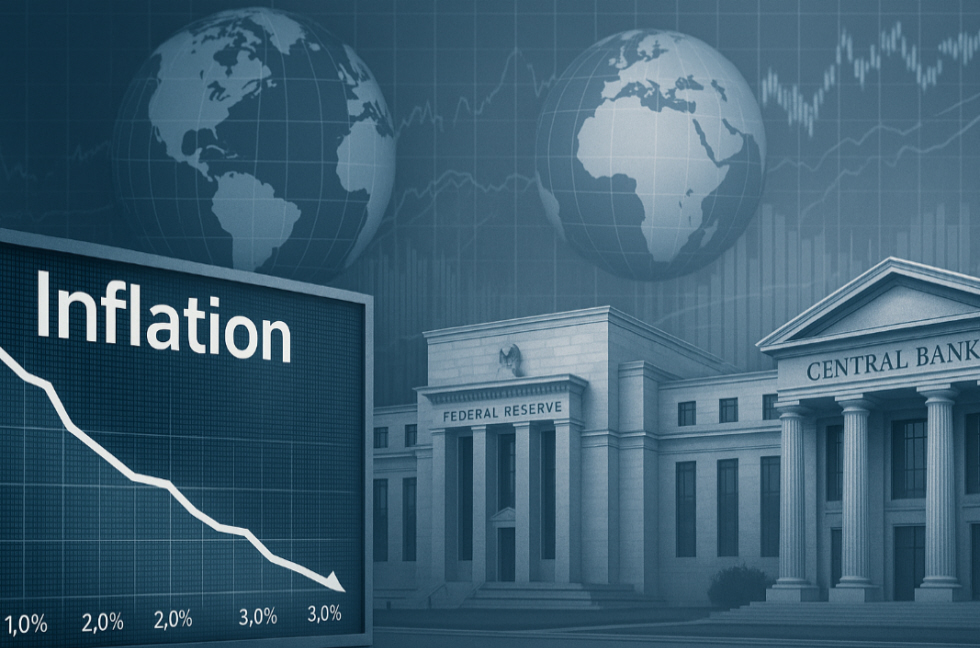
Global inflation is showing its most significant slowdown in nearly four years, offering a glimmer of optimism for policymakers and financial markets after a prolonged period of price volatility and monetary tightening. According to recent data from the International Monetary Fund (IMF) and the World Bank, the global inflation rate has declined to an average of 3.1% in 2025 — its lowest level since early 2021 — driven by lower energy prices, improving supply chains, and moderate wage growth in key economies.
However, central banks remain cautious, signaling that monetary easing will proceed slowly to prevent a resurgence in inflationary pressures. In the United States, the Federal Reserve noted in its latest policy statement that inflation has moved closer to the 2% target, but Chair Jerome Powell emphasized that “premature rate cuts could undo years of progress.”
Analysts expect the Fed to maintain current interest rates through the next quarter, with gradual adjustments beginning in mid-2026 if the downward trend continues. Similarly, the European Central Bank (ECB) and the Bank of England have adopted a wait-and-see approach, balancing the need to support growth while keeping inflation expectations under control.
Emerging markets have also benefited from this global cooling trend. Falling food and fuel prices have provided relief to nations that were hit hardest by supply shocks during the pandemic and the energy crisis that followed. In Latin America, inflation has dropped sharply in Brazil, Mexico, and Chile, where central banks were among the first to raise rates aggressively. Asia shows a similar pattern, with South Korea and Indonesia reporting stable consumer prices and stronger currency performance.
Commodity markets have played a key role in this moderation. Crude oil prices have remained relatively stable, hovering between $75 and $85 per barrel, while natural gas and agricultural commodities have also declined from their 2022 peaks. These developments have eased production costs and reduced pressure on global trade flows. At the same time, the easing of supply chain disruptions — especially in the semiconductor and logistics sectors — has contributed to more predictable pricing in consumer goods. Despite the positive momentum, economists warn that global disinflation is not yet secure.
Persistent risks include geopolitical tensions, extreme weather events that could disrupt food supplies, and structural labor shortages in advanced economies. “We are entering a phase of fragile stability,” said Gita Gopinath, First Deputy Managing Director of the IMF. “The trajectory is encouraging, but one external shock could reverse the gains we’ve made.”
Financial markets have responded with cautious optimism. Global equities rose modestly following the IMF report, while bond yields eased as investors priced in a more stable economic outlook. However, volatility remains elevated in currency markets, particularly in emerging regions dependent on commodity exports. Looking ahead, policymakers are emphasizing coordination and prudence. The IMF’s latest World Economic Outlook highlights the importance of fiscal discipline and targeted social spending to sustain disinflation without stalling growth.
Meanwhile, central banks across major economies continue to stress data dependency, acknowledging that their decisions will hinge on the trajectory of consumer prices and wage dynamics in the coming months. As 2025 draws to a close, the global economy finds itself at a delicate crossroads: inflation is cooling, growth is stabilizing, and monetary authorities are carefully calibrating their next moves. The world may finally be emerging from the shadow of the inflation shock — but for central banks, the path to lasting stability remains a cautious one.