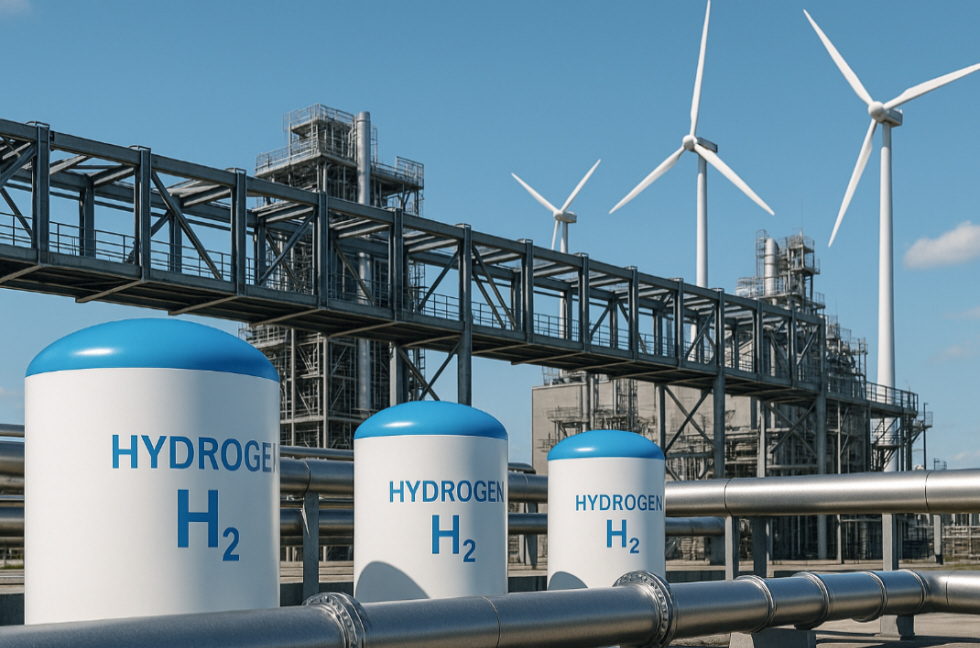
The European Commission has approved a sweeping €20 billion investment plan to establish a continental hydrogen infrastructure network, positioning the European Union at the forefront of the global transition toward clean energy. The initiative, called “Hydrogen Backbone Europe,” aims to build thousands of kilometers of pipelines, production hubs, and refueling stations by 2030, connecting renewable energy sources directly to industrial and transport sectors across the continent.
The project’s scale reflects Europe’s ambition not just to decarbonize but to redefine its entire energy landscape. Germany, France, and Spain will lead the first phase of the initiative, focusing on creating regional hydrogen corridors powered by solar and wind energy. These hubs will supply green hydrogen to refineries, steel manufacturers, and chemical industries, reducing their dependence on natural gas and cutting emissions by as much as 15 percent by 2035.
Hydrogen will also play a vital role in clean mobility: the plan includes a Europe-wide network of refueling stations for trucks, buses, and trains running entirely on hydrogen fuel cells. “The Hydrogen Backbone is more than just infrastructure — it’s a foundation for the energy independence of Europe,” said Kadri Simson, the European Commissioner for Energy. “By integrating renewable power and hydrogen production, we can strengthen our resilience and move faster toward climate neutrality.” Funding for the project will come from a combination of public and private sources.
The European Investment Bank (EIB) will provide €10 billion in low-interest financing, while national governments and private companies will contribute the remaining funds. Several major energy firms, including Siemens Energy, Engie, and Iberdrola, have already announced participation in the first development stage, which begins construction in mid-2026.
The technological core of the project lies in electrolyzers — machines that split water into hydrogen and oxygen using renewable electricity. Advances in electrolyzer efficiency have made green hydrogen increasingly competitive compared to fossil-based hydrogen derived from natural gas. As renewable energy capacity grows, the cost of hydrogen production is expected to fall below €2 per kilogram, making it viable for heavy industries and transportation sectors that have been difficult to electrify.
Environmental groups have cautiously welcomed the initiative, emphasizing the importance of ensuring that hydrogen production remains strictly renewable. Critics warn that “blue hydrogen,” made from natural gas with carbon capture, could undermine emission goals if used excessively.
However, the Commission has pledged to prioritize green hydrogen projects and phase out fossil-based variants entirely by 2040. If successful, Hydrogen Backbone Europe will reshape the continent’s energy architecture, creating over 200,000 jobs and establishing the EU as a leader in clean industrial technology.
By turning renewable energy into a tangible economic driver, Europe hopes to set a global standard for sustainable growth. In an era of energy uncertainty, hydrogen is emerging as both a fuel and a symbol — a sign that the future of power may finally be as clean as the air we breathe.