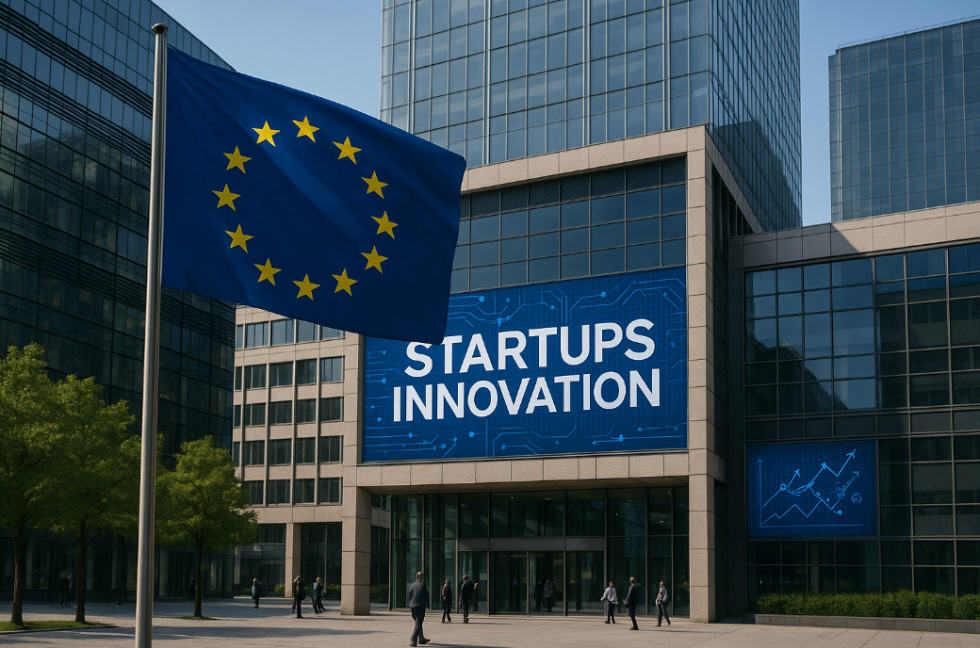
The European Union has taken a decisive step toward strengthening its position in the global technology race by launching a new billion-euro fund aimed at supporting deep-tech and artificial intelligence startups. The initiative, announced by the European Investment Bank (EIB) and the European Innovation Council (EIC), seeks to close the funding gap between Europe and its American and Asian competitors, ensuring that promising ideas born within the continent can grow into world-leading companies without having to relocate abroad.
The fund, officially named the European Tech Champions Initiative (ETCI), will provide direct investment and co-financing opportunities for early- and mid-stage startups working in fields such as quantum computing, AI, robotics, semiconductors, biotechnology, and cybersecurity. The program’s structure blends public and private capital to mobilize up to €10 billion over the next five years, with an initial €3.5 billion already allocated for deployment in 2025.
European policymakers have long recognized that while the continent excels in research and academic excellence, it lags behind in scaling up technological innovation. Many startups reach a promising prototype stage but fail to attract the massive growth funding that U.S. and Chinese firms routinely secure. By addressing this structural weakness, the new initiative aims to create a self-sustaining ecosystem where innovation is nurtured from lab to market.
“The future of European sovereignty depends on our capacity to innovate at scale,” said Margrethe Vestager, Executive Vice-President of the European Commission. “This fund represents a collective investment in Europe’s technological independence, competitiveness, and resilience.” In practical terms, ETCI will act as a “fund of funds,” channeling capital through existing venture networks while creating new cross-border instruments to support collaboration between EU member states. Startups receiving funding will also gain access to mentorship programs, international partnerships, and regulatory support designed to accelerate their market entry.
The timing of the initiative is critical. As the United States and China continue to dominate the AI and semiconductor markets, Europe faces the dual challenge of catching up technologically while preserving ethical and environmental standards. The EU’s approach emphasizes sustainable growth, data transparency, and responsible AI development, aligning economic progress with social values. Private investors have responded positively to the announcement, with several European venture firms expressing interest in joining the initiative.
Analysts predict that this could mark the beginning of a new era for European tech — one defined not by dependence on foreign capital, but by regional collaboration and long-term vision. If successful, the European Tech Champions Initiative could position the EU as a major hub for deep-tech innovation, bridging the gap between academia, entrepreneurship, and industrial policy.
The combination of financial strength and regulatory foresight may finally allow Europe to compete on equal footing with Silicon Valley and Shenzhen, setting the stage for a more balanced global technological landscape. As Europe invests not only in technology but in its own creative potential, this billion-euro commitment sends a clear message: the future of innovation will not be dictated by geography, but by vision — and Europe intends to lead with both.