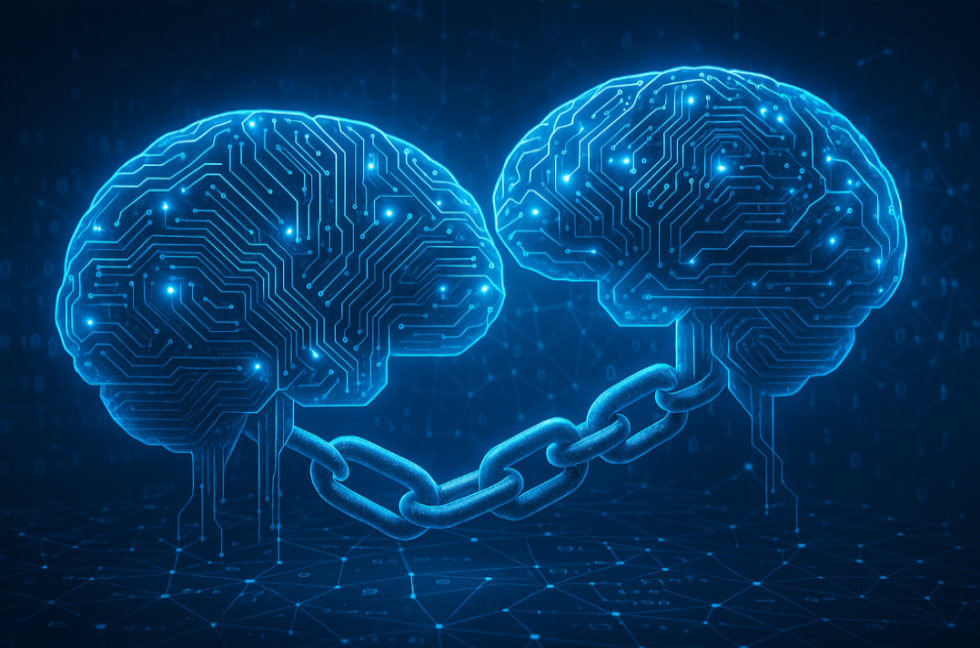
The frontier between artificial intelligence and blockchain technology is rapidly disappearing as decentralized AI projects attract major investors and developers around the world. What was once considered a futuristic concept is now becoming a viable sector — a digital ecosystem where machine learning models operate on open, decentralized networks instead of being controlled by corporations. This new wave of “decentralized intelligence” promises to redefine ownership, privacy, and innovation in the AI economy. Leading projects such as SingularityNET, Fetch.ai, and Ocean Protocol are spearheading this transformation.
These platforms enable developers to build and deploy AI agents that operate autonomously, exchanging data and computational power using blockchain-based incentives. Unlike centralized AI systems, where control and profit are concentrated in a few tech giants, decentralized AI models distribute both access and revenue among global participants. The renewed investor interest began in early 2025 after several venture capital firms, including a16z Crypto, Animoca Ventures, and Pantera Capital, announced multi-million-dollar funding rounds for decentralized AI startups.
According to Messari Research, the total market capitalization of blockchain-based AI projects has surged by more than 250 percent since the beginning of the year, reaching over $35 billion in combined value. Analysts attribute this growth to a growing belief that the future of AI must be open, transparent, and democratized to prevent monopolization by large corporations. Dr. Ben Goertzel, founder of SingularityNET, said during a recent summit in Dubai: “Artificial intelligence should belong to everyone, not to a handful of corporate entities. Decentralized AI ensures that the future of intelligence is collaborative and fair.”
His platform allows anyone to contribute algorithms or datasets to a global AI marketplace, earning cryptocurrency tokens in exchange for their contributions. Beyond philosophy, there are strong technical reasons driving the shift toward decentralization. AI systems depend on massive amounts of data — and blockchain offers a way to verify, secure, and monetize that data without compromising privacy.
Decentralized networks allow users to maintain ownership of their information while granting temporary, traceable access to AI systems through smart contracts. This model is being adopted by new startups in healthcare, finance, and cybersecurity, where trust and data integrity are essential. Investors are also excited about the fusion of AI agents and decentralized autonomous organizations (DAOs), which could allow AI systems to manage and allocate capital without human intermediaries.
Some projects are already experimenting with autonomous trading bots, AI-driven governance models, and on-chain neural networks capable of evolving independently over time. The long-term vision, according to experts, is a global digital society where both humans and AI agents collaborate economically through blockchain incentives. Still, the sector is not without challenges. Critics warn that decentralized AI faces issues of scalability, interoperability, and regulation.
The lack of a unified legal framework for autonomous agents raises complex questions about accountability and ethics. Moreover, the computational intensity of AI models remains a barrier for many blockchains, though new hybrid systems like Render Network and Akash are working to solve that by providing decentralized GPU computing resources. Despite these hurdles, the momentum is undeniable.
Venture capital, open-source innovation, and public interest are converging to create one of the most dynamic intersections of technology in modern times. The synergy between AI and blockchain could redefine how humanity builds and governs intelligent systems — not as closed products, but as shared global infrastructures. As decentralized intelligence gains traction, the message is clear: the next generation of AI will not only learn from humanity, but also belong to it.