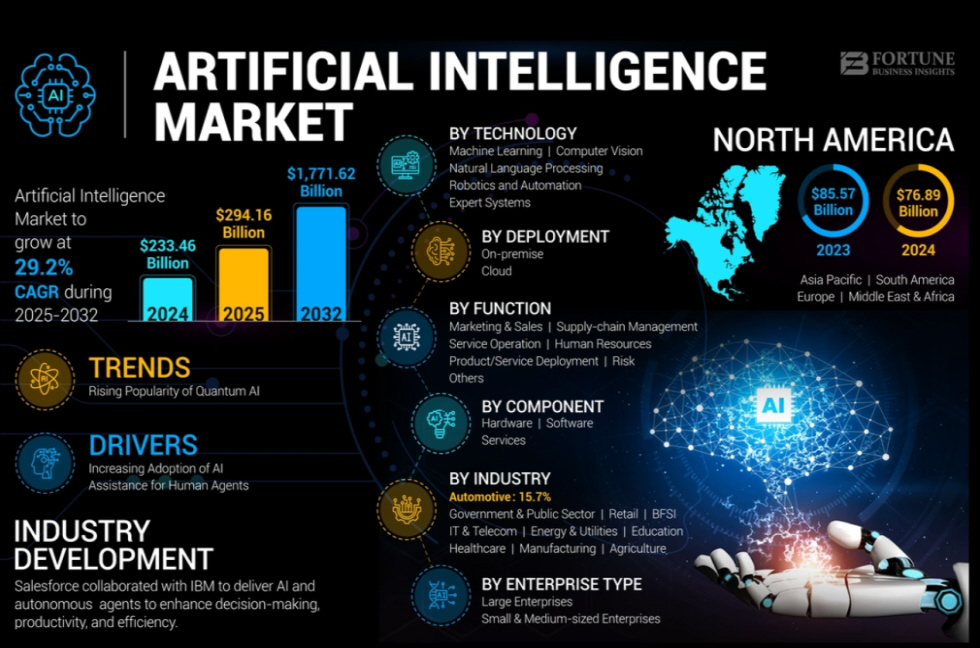
Artificial intelligence is reshaping productivity expectations across industries, forcing companies, workers and policymakers to reconsider long-standing assumptions about efficiency, output and the nature of work itself. Tasks that once required hours of human effort can now be completed in minutes through AI-assisted analysis, content generation and automated decision support.
This acceleration is not merely improving productivity metrics, but redefining what organizations consider a normal pace of operation in the digital economy. As AI tools become embedded in daily workflows, businesses are adjusting performance benchmarks and restructuring teams around human-AI collaboration. Roles focused on repetitive or routine tasks are increasingly automated, while demand grows for skills related to oversight, strategy, interpretation and creative judgment.
At the same time, concerns are emerging about uneven productivity gains, where companies with early access to advanced AI systems gain disproportionate advantages over smaller or less technologically equipped competitors. The long-term implications extend beyond corporate efficiency into labor markets, education systems and economic policy. Higher productivity driven by artificial intelligence has the potential to boost growth, but it also raises questions about job displacement, wage distribution and the sustainability of continuous output acceleration.
As industries adapt, productivity is no longer measured solely by human effort, but by how effectively organizations integrate intelligent systems into their operational and strategic frameworks. Artificial intelligence is not just raising expectations — it is fundamentally redefining them.